
THIS WEEK’S RECOMMENDATION
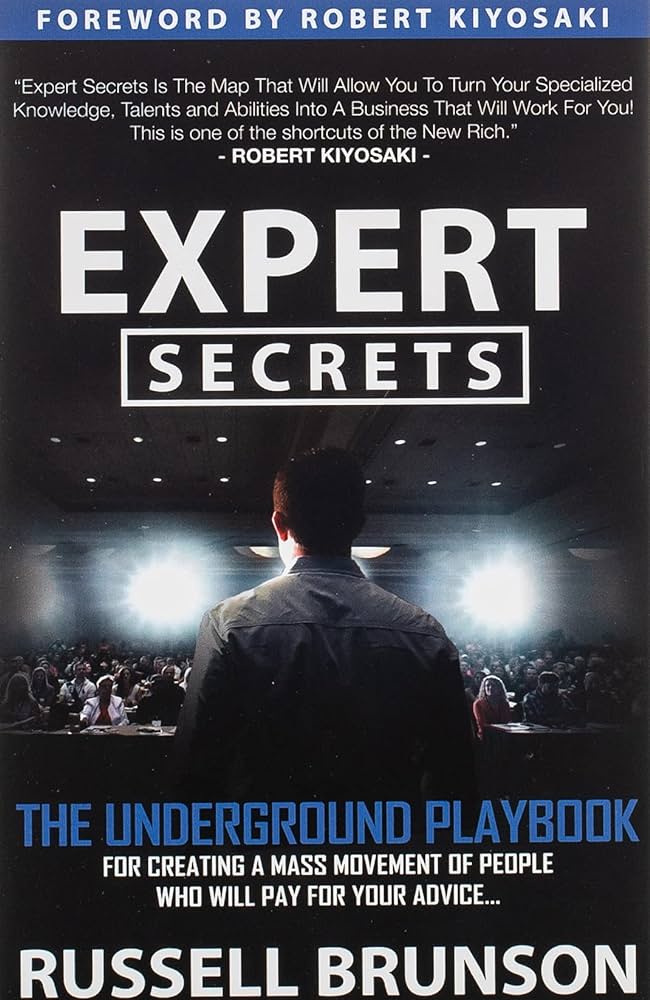
Expert Secrets by Russell Brunson is worth your time - with one caveat going in. The core premise is simple: package your knowledge and expertise into a scalable business by building an audience and selling through storytelling. What makes it genuinely useful is the framing around identity - Brunson argues that you're not selling a product, you're leading a movement built on what you uniquely know. For athletes who've spent a career being told their value lives entirely on the pitch, that reframe hits differently. The sales funnel heavy-lifting in the second half is less relevant for most of you, but the first third alone is worth the read.
If you're just starting to film yourself training, your phone is enough! Don’t worry about getting tons of gear before you figure out the style of videos you want to create and how much you ACTUALLY enjoy the filming process. Film near windows or under bright gym lights, use a small tripod to keep things steady, and treat audio as seriously as your image - if people can't hear you clearly, the footage doesn't matter. Start simple, stay consistent, and upgrade your gear only once you've proven to yourself you'll actually use it.
THE CORE TOPIC: SEVEN REASONS BUILDING A PERSONAL BRAND SAVED MY FOOTBALL CAREER
A stranger found me on YouTube, liked what he saw, and called me. That call turned into a contract with Flower City Union in Rochester, New York - and we won a national title.
I had just been cut from a team in Michigan due to something most coaches and owners would’ve been thrilled by. I was confused, frustrated, and completely unsure of what to do next. But I hadn't stopped training, hadn't stopped filming, hadn't stopped building my brand. Frankly, that (and my wife) were what kept me sane through this time. Because I stayed on track with my brand and business, I was visible to someone I had never met, in a city I'd never been to, who saw enough value to pick up the phone.
That is what a personal brand does. It makes you findable when you aren't in the room.
Here's the full picture of what building one actually did for my career - and what I think it could do for yours.
1. It forced me to figure out who I actually was.
Building a personal brand starts with a question most athletes never ask: Who is the ideal version of my future self? Sitting with that question got me out of my immediate circumstances and made me dream bigger outside the narrow context of football. More importantly, it helped me separate who I was from what I did. I stopped deriving my self-confidence from my performance on the pitch and found value in who I am as a person. The "pro footballer" identity stopped owning me. That was the most important shift of my career - not a contract, not a trial, not a coach's approval.
2. Personal branding is a mental performance tool.
This is the one that surprises people. Building a brand is a deeply psychological process because it starts with where you want to go. If you have no idea who you are or who you want to become, personal branding is pointless. Working through those questions with intent makes you mentally sharper in everything else you do - think of your ideal future self as the filter through which the rest of life’s decisions get put through first. For me, it became a mental performance tool more than a content strategy. Understanding what I wanted, and having clarity on where I was heading, made me stronger on the pitch. The psychological work of branding is the work.
3. It gave me balance, and balance gave me longevity.
Elite sport is relentless. The mental and physical toll is real, and the athletes who burn out fastest are the ones who go all-in on one thing with no outlet, no break, no identity outside their sport. I understand the argument for obsession! I lived it. But for longevity and sustained performance, the ability to take a mental break from what you're doing matters enormously.
Building something that was 100% mine - a project no coach could cut me from, no result could take away - gave me that break. It kept me balanced in the hardest moments. And being balanced kept me in the game longer than most.

This balance also made me completely self-sufficient. There were no external sources keeping me accountable for my brand - it was all on me. That habit translated directly to how I operated on the pitch. I didn't wait for a coach to tell me I needed to change something. I was the first to raise my hand and say I hadn't performed well enough and needed to improve. Taking extreme ownership gives you control, at least psychologically - and psychologically, control is everything.
4. I watched more film than anyone else on the team.
Creating content around my sport meant filming training sessions constantly. And filming meant I had footage to watch. While most players reviewed film once or twice a week in a team setting, I was watching myself train every single day. I could self-correct things no coach had time to spot: technical habits, movement patterns, small inefficiencies. I became an active participant in my own development rather than sitting passively and waiting for feedback. The players who surpassed their teammates in technique and skill were often the ones who did the extra work off the pitch. For me, daily film review became a big part of that work.
5. I learned how to advocate for myself in coach's offices, not just online.
Building and advocating for a personal brand in public made me an exceptionally good advocate for myself in professional sport. The skills are the same: clarity, communication, knowing your value proposition.
Coaches consistently comment on how poorly most players communicate. A player walks into the office emotional, asking why they aren't playing. That conversation goes nowhere. I walked in and constructively asked what the coach needed from me, what mattered most to him, and how I could meet those expectations. I could clearly articulate my value, which meant better contract negotiations and real leverage in conversations that most players lose before they start.
Even in situations where the coach chose not to play me, I was known as someone who communicated well and acted like a team player. That reputation kept me in the room longer than some of my minutes suggested.
6. Visibility opened doors that talent alone never would have.
Without a personal brand, I was invisible. Genuinely invisible. It doesn't matter how well you play if no one who can help you knows you exist. With a personal brand, visibility and credibility compound, and opportunities start finding you instead of the other way around.
The Rochester story is the clearest proof. But it wasn't a lucky break. It was the result of consistent output over time, on platforms that people could actually discover. The individual who reached out didn't find me through an agent or a coaching connection. He found me because I showed up consistently and publicly. That's the mechanism. Show up long enough, clearly enough, and the right people eventually find you.
7. It made me financially viable outside my sport and that changed everything about how I played.
In the lower divisions of professional football, financial stress is one of the most damaging and least-discussed performance killers. At various points, I was making $300-400 a month. That number creates a particular kind of psychological weight that follows you onto the pitch.
Building a personal brand and a business around it - separate from football entirely - lifted that weight. Football remained my first priority, but having an income stream that wasn't dependent on a coach's decision about my minutes freed me to make choices I genuinely wanted to make. I took opportunities because they were the right fit for my playing experience, not because they were the only option financially.
Players who build a personal brand get that luxury. They can choose where to play based on what they actually want - not what they can afford to accept. That is a form of freedom most professional athletes at this level have never experienced.
LET’S HEAR FROM YOU
The financial pressure piece - reason seven - is the one most athletes don't talk about openly. But it quietly shapes almost every decision: which team, which contract, which opportunity.
Here's what I want to know: has financial pressure ever pushed you into a decision in your sport that wasn't really the right one for your career?
Reply directly, or share this newsletter with a teammate or athlete you think needs to read it. Every week, I write for the player who's building something while still competing. If that's someone you know, send it their way!
Stay Dangerous,

SOCIAL MEDIA TIP OF THE WEEK